

Yes, too much chlorine in a pool can cause irritation and, in more serious cases, illness or injury. However, symptoms that people associate with excessive chlorine are not always caused by high chlorine levels alone. Chloramines, incorrect pH, contaminated water, poor circulation, improper chemical application, and swimming too soon after treatment can all contribute to uncomfortable swimming conditions.
Chlorine plays an essential role in keeping swimming pools sanitary. The goal is not to eliminate chlorine, but to maintain the correct level through accurate testing, proper circulation, regular cleaning, and consistent professional pool maintenance.
For Austin homeowners, maintaining balanced pool water can be especially challenging because heat, intense sunlight, storms, pollen, and frequent swimming can quickly affect water chemistry. Understanding how chlorine works and recognizing the signs of a chemical imbalance can help you keep your pool clean, comfortable, and ready to enjoy.
This article provides general pool-maintenance information and should not be used to diagnose symptoms or replace medical advice.
Why Your Swimming Pool Needs Chlorine
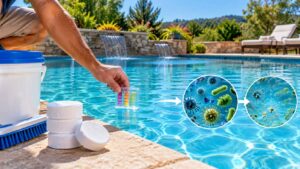
Chlorine is one of the most important components of swimming pool sanitation. When maintained properly, it helps kill or inactivate many harmful germs, control algae, break down contaminants introduced by swimmers, and keep pool water clear and sanitary.
Without adequate sanitizer, bacteria and other microorganisms can survive in pool water. That is why both insufficient chlorine and excessive chemical treatment can create problems.
The objective is balanced water.
Regular pool cleaning service can help maintain that balance by combining physical cleaning with water testing, chemical adjustments, filtration checks, and other routine maintenance tasks.
What Happens When There Is Too Much Chlorine in a Pool?
Exposure to excessively chlorinated water may cause noticeable discomfort. Possible high chlorine symptoms include:
- Dry, itchy, or irritated skin
- Red or burning eyes
- Nose or throat irritation
- Coughing
- An unusually harsh feeling in the water
- Premature fading of swimwear
- Damage to certain pool covers and accessories
Long-term chemical imbalance can also contribute to deterioration or corrosion of pool components.
However, symptoms alone cannot confirm that your pool contains too much chlorine. Incorrect pH, chloramines, and other water-quality problems can cause similar symptoms.
Testing is the only reliable way to determine what is happening with your water.
Is Chlorine Making You Sick, or Is Something Else Wrong?
“Chlorine sickness” is not a precise diagnosis. If someone feels uncomfortable after swimming, several factors could be involved.
The swimmer may have been exposed to excessive sanitizer, chloramines, water with an unsuitable pH, germs surviving because sanitizer levels were too low, or concentrated pool chemicals. Accidentally swallowing contaminated pool water can also cause problems.
An unrelated allergy or medical condition could produce similar symptoms.
If several swimmers experience similar irritation after using the same pool, keep people out of the water until the pool has been properly tested and inspected.
A Strong Chlorine Smell Does Not Always Mean Too Much Chlorine
One of the most common misconceptions about pool water is that a strong chlorine smell in a pool automatically means there is too much chlorine.
That is not necessarily the case.
What Are Chloramines?
Chloramines form when chlorine reacts with contaminants introduced into the water, such as sweat, body oils, urine, dirt, skin cells, sunscreen, makeup, and other personal-care products.
As chlorine reacts with these substances, less free chlorine may be available to sanitize the pool effectively. Chloramines can also produce the distinctive chemical odor that many people associate with “too much chlorine.”
Chloramines may contribute to burning eyes, irritated skin, coughing, throat irritation, and an unpleasant chemical smell.
This is one reason simply adding more chemicals without testing the water first is not always the right solution.
How Regular Pool Cleaning Helps Control Chloramines
Removing contaminants gives your pool’s sanitizer less organic material to deal with.
A comprehensive weekly cleaning routine may include surface skimming, brushing walls and steps, vacuuming the pool floor, emptying skimmer and pump baskets, checking circulation, maintaining the filter, and testing the water chemistry.
Hill Country Pools follows an 8-step weekly pool cleaning process designed around the needs of Austin pools.
The Connection Between Pool Cleanliness and Chlorine Demand
The dirtier your pool becomes, the harder your sanitizer has to work.
Leaves, pollen, dust, sunscreen, algae, body oils, and other organic contaminants can increase chlorine demand. When these materials accumulate, homeowners may notice chlorine disappearing more rapidly, algae returning, unpleasant odors developing, or chemical levels becoming harder to maintain.
Consistent cleaning reduces the amount of material chlorine needs to handle.
This is particularly important in Central Texas, where pollen, leaves, dust, intense heat, and frequent swimming can place significant demands on residential pools.
Austin homeowners can learn more about managing these seasonal changes in our Austin pool maintenance calendar.
How Incorrect pH Can Be Mistaken for High Chlorine
Chlorine is only one part of your pool’s overall chemistry. pH also affects swimmer comfort and how effectively chlorine works.
When pH is too low, the water may become irritating to the skin and eyes and potentially contribute to corrosion or damage to certain pool surfaces and components.
When pH is too high, chlorine may become less effective. High pH can also contribute to cloudy water, scaling, and swimmer discomfort.
This means your chlorine reading could appear acceptable while another part of the water chemistry is creating problems.
Professional pool water testing evaluates the broader chemical balance rather than relying on one measurement.
Signs Your Pool’s Chlorine or Chemistry Needs Attention
Schedule water testing if you notice persistent chemical odors, burning eyes, dry or itchy skin, coughing near the pool, cloudy or green water, recurring algae, rapidly changing pH, unusually fast chlorine loss, bleached swimwear, or visible corrosion.
You should also have the pool checked if several swimmers experience irritation or if problems appear shortly after a major chemical treatment.
Remember that clear water does not necessarily mean properly balanced water. Routine testing remains important even when your pool looks clean.
Can Chlorine Affect Your Skin and Eyes?
Yes. Chlorine skin irritation can occur when water chemistry is not properly managed.
Excessive sanitizer, chloramines, or unsuitable pH levels may contribute to dryness, itching, redness, and burning eyes.
Swimmers can reduce potential irritation by showering before entering the pool, rinsing after swimming, changing out of wet swimwear, and moisturizing after showering.
If your pool suddenly develops a strong chemical smell or causes unusual irritation, avoid swimming until the water has been tested.
Persistent, painful, blistering, or spreading skin symptoms should be evaluated by a healthcare professional.
Can Chlorine Cause Breathing Problems?
Chlorine compounds and chloramines can irritate the respiratory tract. Warning signs may include coughing, wheezing, throat irritation, chest tightness, or shortness of breath.
Anyone experiencing breathing difficulty should leave the area and seek appropriate medical attention.
It is also important to distinguish normal swimming-pool exposure from an accidental chemical spill or release. Mixing incompatible pool chemicals can create dangerous gases and should be treated as a chemical emergency.
Can Swallowing Chlorinated Pool Water Make You Sick?
Accidentally swallowing a small amount of normally maintained pool water is very different from swallowing a concentrated chlorine product.
Pool water can still contain germs, particularly when sanitation is inadequate. Swimmers should avoid intentionally swallowing pool water.
If someone swallows concentrated pool chemicals or develops significant symptoms following chemical exposure, seek appropriate medical assistance or contact Poison Control.
How Do You Know If There Is Too Much Chlorine?
Do not judge chlorine levels based solely on smell, water clarity, skin irritation, or how much chlorine was recently added.
The water needs to be tested.
A comprehensive test may evaluate free chlorine, combined chlorine, pH, total alkalinity, cyanuric acid, and other measurements relevant to the specific pool system.
If you’re unsure about your results, professional pool maintenance can help identify the imbalance and determine what needs to be corrected.
Why DIY Chlorine Treatment Can Go Wrong
Basic home pool maintenance can be useful, but chemical treatment requires accurate measurements.
Common mistakes include adding chlorine without testing, incorrectly estimating pool volume, confusing total chlorine with free chlorine, ignoring pH and alkalinity, and assuming a chemical odor means chlorine levels are too high.
Other problems occur when homeowners add multiple products too close together, attempt to compensate for poor filtration with additional chemicals, use an incorrect dosage, or fail to retest before swimming.
Austin’s weather makes chemical management even more dynamic. Heat, intense sunlight, rainfall, and heavy swimming can all change chlorine demand.
What Should You Do If the Chlorine Is Too High?
If testing confirms excessive chlorine, keep swimmers out of the pool and stop adding additional chlorine or shock treatments.
Test the water accurately and review what products were recently added. Check the pH and broader water balance, make sure the circulation system is functioning correctly, and follow the chemical manufacturer’s directions.
If you are uncertain about the results, arrange professional testing.
Do not assume there is a universal number of hours you need to wait before swimming. How quickly chlorine levels change depends on factors such as the starting concentration, pool volume, chlorine product, sunlight, stabilizer level, water temperature, and circulation.
Retest the water before anyone gets back in.
Never Mix Pool Chemicals
Pool chemicals can become extremely dangerous when improperly combined.
Never mix chlorine with acid or combine different chlorine products. Keep pool chemicals dry and in their original containers, use clean and dedicated measuring equipment, and follow all manufacturer instructions.
Avoid inhaling fumes or chemical dust, and keep pool chemicals safely away from children and pets.
If chemicals are accidentally mixed or a gas is released, leave the area and seek emergency assistance.
How Professional Pool Cleaning Helps Prevent Chlorine Problems
Regular professional service is about much more than making the water look clean.
During a weekly pool cleaning service, water chemistry can be monitored consistently so developing problems are identified before they become larger issues.
Cleaning also removes chlorine-consuming contaminants through skimming, brushing, and vacuuming. Filters, pumps, and other equipment can be inspected to ensure the pool has adequate circulation and filtration.
Recurring chlorine loss may indicate algae growth, excessive contamination, poor circulation, filter problems, improper stabilizer levels, or equipment issues.
Consistent care can reduce the likelihood of major chemistry swings and repeated corrective treatments.
Why Local Austin Pool Care Matters

Austin pools face conditions that can cause water chemistry to change quickly.
Strong sunlight can break down unprotected chlorine. Prolonged summer heat, warmer water, and increased swimming can increase sanitizer demand and encourage algae growth.
Storms and rainfall may introduce debris, dilute chemicals, and affect pH. Pollen, dust, leaves, and other windblown debris increase the organic load that the sanitizer and filtration system must manage.
Evaporation and frequent refilling can also gradually alter the pool’s overall water balance.
A local company familiar with Central Texas conditions can adapt maintenance to your pool, the weather, and the season.
Hill Country Pools has provided swimming pool services in Austin since 1972, with services including pool cleaning, maintenance, equipment repair, and leak detection.
Frequently Asked Questions About Chlorine
Does a strong chlorine smell mean the level is dangerously high?
Not necessarily. A strong chemical odor may be associated with chloramines created when chlorine reacts with contaminants. Test the water rather than relying on smell.
How long should I wait to swim after adding chlorine?
Follow the product manufacturer’s instructions and test the water before swimming. There is no universal waiting period for every pool, product, and dosage.
Can high chlorine cause a rash?
Excessively treated water may irritate the skin, but rashes can have many causes. Persistent or severe symptoms should be evaluated by a healthcare professional.
Why does my pool smell strongly of chlorine after a busy weekend?
More swimmers introduce additional sweat, sunscreen, body oils, and other contaminants. These substances can increase chlorine demand and contribute to chloramine formation.
Are saltwater pools chlorine-free?
No. Saltwater pool systems generate chlorine. These pools still require monitoring of chlorine, pH, and overall water chemistry.
Does weekly pool cleaning help control chlorine?
Yes. Regular cleaning removes contaminants, supports filtration, and provides an opportunity to test and adjust water chemistry before small imbalances become larger problems.
When to Call a Local Pool Maintenance Company
Consider professional help if chlorine readings remain unusually high or low, results appear inconsistent, several swimmers experience irritation, algae keeps returning, or the pool develops a recurring chemical odor.
Professional attention is also useful when chlorine disappears unusually quickly, filtration or circulation appears inadequate, or you are unsure what chemicals have already been added.
Hill Country Pools provides pool cleaning and pool maintenance services for homeowners throughout Austin and surrounding areas. The company has served Austin pool owners since 1972 and provides flexible pool care without requiring long-term cleaning contracts.
Keep Your Austin Pool Clean, Comfortable, and Balanced
So, can too much chlorine make you sick? Excessive chlorine exposure can cause irritation and potentially more serious problems, but chlorine is not always the reason a pool causes discomfort.
Chloramines, unsuitable pH, contaminated water, poor filtration, incorrect chemical dosing, and other water-balance problems can produce similar symptoms.
That is why proper pool care involves more than adding chlorine. Thorough cleaning, accurate testing, appropriate chemical dosing, filtration maintenance, circulation checks, and regular monitoring all work together to maintain healthy pool water.
Austin’s heat, sunlight, storms, pollen, and long swimming season can make those levels change quickly. Rather than waiting until the water smells strange, turns cloudy, or starts causing irritation, consistent professional care can identify problems early.
Concerned about your pool’s chlorine levels, strong chemical odors, or unstable water chemistry? Contact Hill Country Pools to schedule professional pool cleaning and maintenance in Austin, TX, and keep your pool clean, balanced, and ready to enjoy.


