

How Can Pool Water Affect Your Skin?
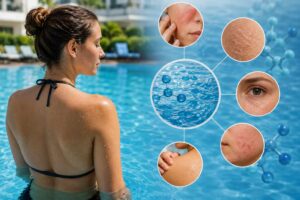
Pool water may contribute to:
- Dry or tight-feeling skin
- Itching
- Redness
- Burning or stinging
- Aggravation of sensitive skin
- Certain rashes associated with inadequately sanitized water
The effect can vary depending on:
- The pool’s chlorine and pH levels
- How clean the water is
- How long someone swims
- The swimmer’s individual skin sensitivity
- Whether circulation and filtration are working correctly
- How consistently the pool is maintained
Properly maintained chlorine is important because it helps protect swimmers from germs. The objective is not to eliminate chlorine but to keep the pool clean and correctly balanced.
Why Pool Cleaning Matters for Skin Comfort
Pool water collects contaminants every day, including:
- Leaves and pollen
- Dust and soil
- Sunscreen and cosmetics
- Sweat and body oils
- Hair and skin cells
- Animal debris
- Organic material following rain or storms
These contaminants increase the demand placed on the sanitizer. When they are not removed through cleaning and filtration, chlorine must work harder and may combine with swimmer waste to form irritating chloramines.
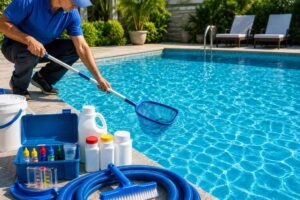
Skimming removes surface contaminants
Regular skimming removes leaves, insects and floating debris before they break down and affect water quality.
Brushing prevents hidden buildup
Pool walls, steps, corners and other low-circulation areas can collect algae and organic material even when the water appears clear.
Vacuuming removes settled debris
Material on the pool floor may consume sanitizer and create conditions that support algae or microbial growth.
Filter maintenance supports clean water
A clogged, dirty or incorrectly operating filter cannot remove contaminants effectively. This can contribute to cloudy water, recurring algae and unstable chemistry. Our pool cleaning service covers skimming, brushing, vacuuming and filter care as standard.
How Pool Maintenance Supports Healthy Water
Cleaning removes physical contaminants, while maintenance ensures the pool system can continually circulate, filter and sanitize the water.
Routine maintenance should include:
- Testing and adjusting the water
- Checking the sanitizer level
- Monitoring pH and alkalinity
- Emptying skimmer and pump baskets
- Inspecting circulation
- Cleaning or servicing the filter
- Checking the pump and other equipment
- Watching for leaks, algae, scale and staining
- Adjusting treatment for weather and swimmer use
Chemistry problems often return when the underlying filtration or circulation issue is not corrected. That’s why our pool maintenance service pairs water testing with a full equipment check.
Chlorine, Chloramines and Your Skin
Why pools need chlorine
Chlorine helps control germs and algae. Without sufficient sanitizer, a pool may expose swimmers to contaminated water.
Can too much chlorine irritate the skin?
Excessively treated water may cause dryness or irritation. However, homeowners should not assume that every strong odor or skin reaction means chlorine is too high.
What are chloramines?
Chloramines form when chlorine reacts with contaminants such as:
- Sweat
- Body oils
- Urine
- Sunscreen
- Cosmetics
- Dirt
- Organic debris
They may contribute to:
- Itchy or irritated skin
- Red or burning eyes
- A strong chemical odor
- Nose, throat or respiratory irritation
How regular cleaning helps control chloramines
Regular cleaning and filtration reduce the organic material in the water. Accurate testing also allows a professional to distinguish between free chlorine (the chlorine available to sanitize) and combined chlorine associated with chloramines.
This is why simply adding more chlorine without testing may not solve the underlying problem.
How Incorrect pH Can Irritate Your Skin
pH affects both swimmer comfort and the performance of chlorine.
Low pH
Water with a low pH is more acidic. It may:
- Feel harsh on the skin
- Irritate the eyes
- Corrode equipment
- Damage certain pool surfaces
High pH
High-pH water may:
- Reduce chlorine effectiveness
- Contribute to cloudy water
- Encourage scale
- Cause skin or eye discomfort
Why pH requires ongoing attention
A single adjustment does not keep pH stable indefinitely. Rainfall, fresh water, swimmer use, chemical treatments and alkalinity can all change it.
A pool maintenance company can monitor these patterns and make smaller, more accurate adjustments before discomfort or visible water problems develop.
Other Water-Chemistry Problems That Maintenance Can Prevent
Low sanitizer levels
Low chlorine may allow bacteria, algae and other organisms to multiply. Water does not have to look dirty to be inadequately sanitized.
Unstable alkalinity
Incorrect total alkalinity can cause pH to fluctuate, making the pool harder to balance consistently.
Excessive or insufficient stabilizer
Too little stabilizer may allow sunlight to consume chlorine rapidly. Too much may reduce chlorine’s practical effectiveness.
Improper calcium hardness
Incorrect calcium levels can contribute to scale, cloudy water, surface deterioration or corrosive conditions.
Metals and dissolved material
Copper, iron and accumulated dissolved solids can contribute to staining, scale, discoloration and other water-quality concerns. Basic test strips may not reveal every issue affecting the pool, which is why professional testing matters.
Signs Your Pool Needs Cleaning or Professional Maintenance
Homeowners should pay attention to:
- Dry or itchy skin after swimming
- Red or burning eyes
- Strong chemical odors
- Cloudy or dull water
- Green water or visible algae
- Slippery steps or pool walls
- Debris returning soon after cleaning
- Scale around the waterline
- Surface staining
- Rapidly changing pH
- Chlorine that disappears quickly
- Poor water circulation
- Recurring chemistry problems
Clear water can still have unsuitable chemical levels. Appearance and smell are not substitutes for testing. If your equipment seems to be part of the problem, our pool equipment repair technicians can diagnose pumps, filters and circulation issues, and our leak detection team can help if water levels are dropping unexpectedly.
Why DIY Chemical Treatment May Not Solve Skin Irritation
Homeowners can perform useful routine checks, but treating a pool based on one reading has real limitations.
Common mistakes include:
- Adding chlorine without testing first
- Assuming a strong smell means there is too much chlorine
- Measuring total chlorine without checking free and combined chlorine
- Ignoring pH, alkalinity or stabilizer
- Estimating the pool’s volume incorrectly
- Treating algae without addressing filtration or circulation
- Adding several products too close together
- Failing to retest the water
- Using chemicals to compensate for inadequate cleaning
Pool water chemistry is an interconnected system. Correcting one measurement without understanding the others can produce only temporary results, or create a different imbalance.
How a Pool Cleaning and Maintenance Company Can Help
Consistent water testing
A professional can track changes over time instead of reacting only after the water becomes cloudy or uncomfortable.
More accurate chemical adjustments
Professionals calculate treatments based on pool volume, test results, water conditions and the products already in use.
Thorough physical cleaning
Regular skimming, brushing, vacuuming and basket cleaning reduce the organic load placed on the sanitizer.
Filter and circulation monitoring
A maintenance technician can identify poor flow, dirty filters or equipment concerns contributing to recurring chemistry problems.
Faster identification of underlying issues
Repeated algae, chlorine loss or pH movement may indicate a larger issue that cannot be solved by adding another chemical.
Maintenance adapted to local conditions
As an Austin-based, family-owned company, Hill Country Pools understands how local conditions affect residential pools, including:
- Intense sunlight
- Prolonged heat
- Heavy swimming
- Sudden storms
- Pollen
- Leaves and windblown debris
- Water evaporation and refilling
These conditions make consistent, locally informed maintenance especially valuable for Austin pool owners.
How Swimmers Can Help Keep Pool Water Cleaner
- Shower before entering the pool
- Remove excess cosmetics and body products
- Avoid entering while covered in dirt or sweat
- Do not swim when experiencing diarrhea
- Encourage children to take regular bathroom breaks
- Rinse after swimming
- Wash swimwear regularly
- Keep pets out if the pool is not maintained for pet use
- Avoid using the pool when chemical levels are outside the recommended range
Swimmer habits help, but they do not replace routine cleaning and water treatment.
Frequently Asked Questions About Pool Water and Skin
Why does my skin itch after swimming in my pool?
Possible causes include dry skin, chloramines, incorrect pH, excessive treatment, inadequate sanitation or sensitivity to a particular product. Testing the complete water chemistry is the best first step.
Does a strong chlorine smell mean my pool is clean?
No. A strong chemical odor may indicate chloramines formed when chlorine reacts with contaminants. A properly maintained pool should not rely on smell as evidence of sanitation.
Can a dirty pool cause a skin rash?
Inadequately cleaned and sanitized water may allow germs to survive. However, rashes have many possible causes and should not be diagnosed solely by looking at the pool.
Why is my pool irritating my skin when the water is clear?
Water clarity does not confirm that chlorine, combined chlorine, pH, alkalinity or stabilizer are within the appropriate ranges. Professional testing may reveal an imbalance that is not visible.
Is a saltwater pool better for sensitive skin?
Some swimmers find saltwater pools more comfortable, but these systems still generate chlorine. They also require regular cleaning, testing and chemical maintenance.
How often should a residential pool be professionally serviced?
The ideal schedule depends on climate, pool use, surrounding vegetation and the equipment installed. In hot climates and during periods of heavy use, pools usually require especially close and consistent attention. See our services page for options.
Will adding more chlorine fix skin irritation?
Not necessarily. If the issue is caused by chloramines, pH, circulation, filtration or incorrect chemical balance, adding chlorine without testing may not resolve it.
Should I stop swimming if my pool irritates my skin?
It is sensible to stop using the pool until the water has been tested and the possible cause corrected. Persistent or severe skin symptoms should be evaluated by a healthcare professional.
When to Contact a Pool Cleaning and Maintenance Company

Reach out for professional service when:
- Skin irritation happens repeatedly
- Several swimmers experience the same problem
- The pool has a persistent chemical odor
- Chlorine or pH will not remain stable
- Algae keeps returning
- Water remains cloudy
- The filter or circulation system may not be working correctly
- You’re unsure which chemicals have been added
- The pool requires frequent corrective treatments
Conclusion: Cleaner Water Is More Comfortable Water
Skin-friendly pool water does not come from chemicals alone. It depends on the complete maintenance process:
- Removing contaminants
- Maintaining circulation
- Keeping the filter clean
- Testing accurately
- Balancing interacting chemical levels
- Responding to weather and pool use
If your pool leaves your skin feeling dry, itchy or irritated, the answer may involve more than adjusting the chlorine. Our pool cleaning and maintenance team can thoroughly clean your pool, test its complete water chemistry and check the filtration and circulation system. Contact us to schedule professional pool service and enjoy cleaner, more comfortable water.


