

If you’ve ever wondered what actually happens when your pool tech shows up each week, you’re not alone. Many Austin homeowners assume weekly service is just “skimming and chemicals,” but a thorough visit covers far more ground. At Hill Country Pools, our pool cleaning service follows a structured 8-step process that was built for the unique challenges of Central Texas pools, from oak pollen season to relentless summer heat that throws chemistry out of balance fast.
Here’s a behind-the-scenes look at what we check, and why each step matters more than you might think.
1. Surface Skimming

Every visit starts at the surface. Leaves, pollen, grass clippings, and dead insects accumulate quickly, especially during Austin’s heavy pollen seasons in spring and fall. Skimming isn’t just cosmetic, since debris left floating too long sinks, stains pool surfaces, and clogs filtration equipment. Our technicians skim thoroughly before moving to any other task, because clearing the surface first makes every following step more effective.
2. Emptying Skimmer and Pump Baskets
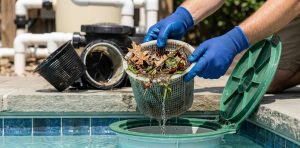
Next, we check and empty the skimmer baskets and pump baskets. These baskets trap debris before it reaches your pump and filter, but when they’re full, water flow slows dramatically. Reduced circulation means weaker filtration, poor chemical distribution, and added strain on your pump motor. A simple basket check prevents bigger equipment headaches down the road, and this kind of small detail is exactly what a trusted pool services company like ours watches for during every visit.
3. Brushing Walls, Steps, Tile, and Waterline
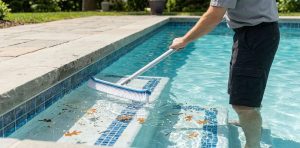
Brushing isn’t just about appearance, though a sparkling pool is certainly part of the goal. Brushing walls, steps, and tile breaks up algae before it has a chance to take hold, and it loosens calcium scale and waterline buildup that vacuuming alone can’t remove. In Austin’s hard water areas, waterline grime builds up faster than many homeowners expect. Regular brushing keeps tile looking new and helps prevent the kind of stubborn staining that eventually requires acid washing or professional tile cleaning.
4. Vacuuming the Pool Floor
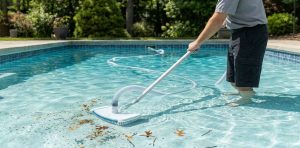
After brushing loosens debris, vacuuming removes dirt, sediment, and organic matter settled on the pool floor. This step is especially important after storms or high wind days, when dust and debris settle faster than skimming alone can handle. A clean floor also makes it easier to spot early signs of staining, plaster issues, or liner damage that might otherwise go unnoticed.
5. Testing and Balancing Water Chemistry

This is where a weekly visit really earns its value. Technicians test pH, chlorine or sanitizer levels, alkalinity, calcium hardness, and stabilizer levels, then adjust chemicals accordingly. In Texas heat, chlorine burns off fast and pH can swing within days. Unbalanced water isn’t just uncomfortable to swim in, it also accelerates equipment corrosion, damages plaster and tile, and creates conditions where algae thrives. Consistent weekly testing catches small imbalances before they become expensive problems.
6. Inspecting Filters, Pumps, and Equipment
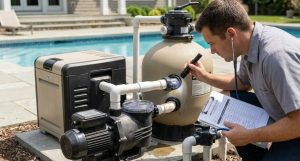
A genuinely thorough visit goes beyond cleaning the water itself. Technicians visually inspect filters, pumps, heaters, and other equipment for signs of wear, leaks, unusual noise, or reduced performance. Catching a failing pump seal or a cracked fitting early can mean the difference between a minor repair and a costly replacement. This is also when techs often spot signs that warrant a closer look, such as unexplained water loss that may point toward a need for professional leak detection services.
Leaks are notoriously easy to miss because evaporation and splash out can mask the real cause of water loss. If your tech notices you’re topping off the pool more than usual, or finds damp spots near equipment pads, that’s a strong signal to investigate further before the issue affects your yard, foundation, or utility bill.
7. Backwashing or Cleaning Filters
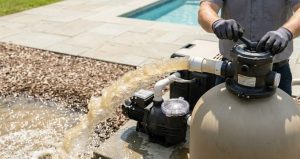
Depending on your filter type, whether sand, cartridge, or DE, technicians check filter pressure and backwash or clean filters as needed. A clogged filter forces your pump to work harder, reduces water clarity, and can shorten equipment lifespan. Knowing when to backwash, and when not to over clean cartridge filters, takes experience, which is one reason many homeowners prefer working with an established pool service provider rather than handling it themselves.
8. Reporting Maintenance Concerns

The final step is often the most valuable, even though it doesn’t involve touching the water at all. After completing the physical service, technicians document anything that needs attention, such as a pump making unusual noise, a heater showing error codes, cracked tile, or equipment nearing the end of its lifespan. Clear communication means small issues get addressed while they’re still inexpensive, rather than turning into emergency repairs.
When equipment problems do arise, prompt pool equipment repair work can prevent a minor pump or filter issue from escalating into a full system failure, especially during peak summer months when pools are used daily.
Why This Process Matters
Skipping steps, or hiring a service that rushes through visits, often leads to problems that surface weeks later, including cloudy water, algae blooms, equipment failure, or unexpected leaks. A consistent, complete weekly process protects your investment and keeps your pool ready for use without surprises.
At Hill Country Pools, we built our 8-step process around the realities of Austin’s climate, including heavy pollen, intense UV exposure, hard water, and unpredictable storms. Every visit is designed not just to clean the pool you see today, but also to protect the equipment and surfaces you’ll rely on for years to come.
The Bottom Line
A weekly pool visit should never feel like a mystery. From skimming the surface to checking pump baskets, balancing chemistry, inspecting equipment, and flagging concerns early, each step plays a specific role in keeping your pool safe, clear, and functional. If your current service feels rushed or inconsistent, it may be worth asking exactly which of these steps they’re actually performing.
For Austin homeowners looking for dependable, thorough weekly care, Hill Country Pools offers the kind of detailed service that catches small issues before they become big ones, keeping your pool ready to enjoy all season long.


